
Astro Wraps & Graphics · Spring, Texas
How to measure a box truck or enclosed trailer for graphics
A “30-foot trailer” can mean the length of the enclosed box or the trailer’s overall length including the tongue. Those measurements produce different artwork and different estimates. Start by identifying every surface you want wrapped, then photograph each measurement so the estimator can see where it begins and ends.
Request a project quote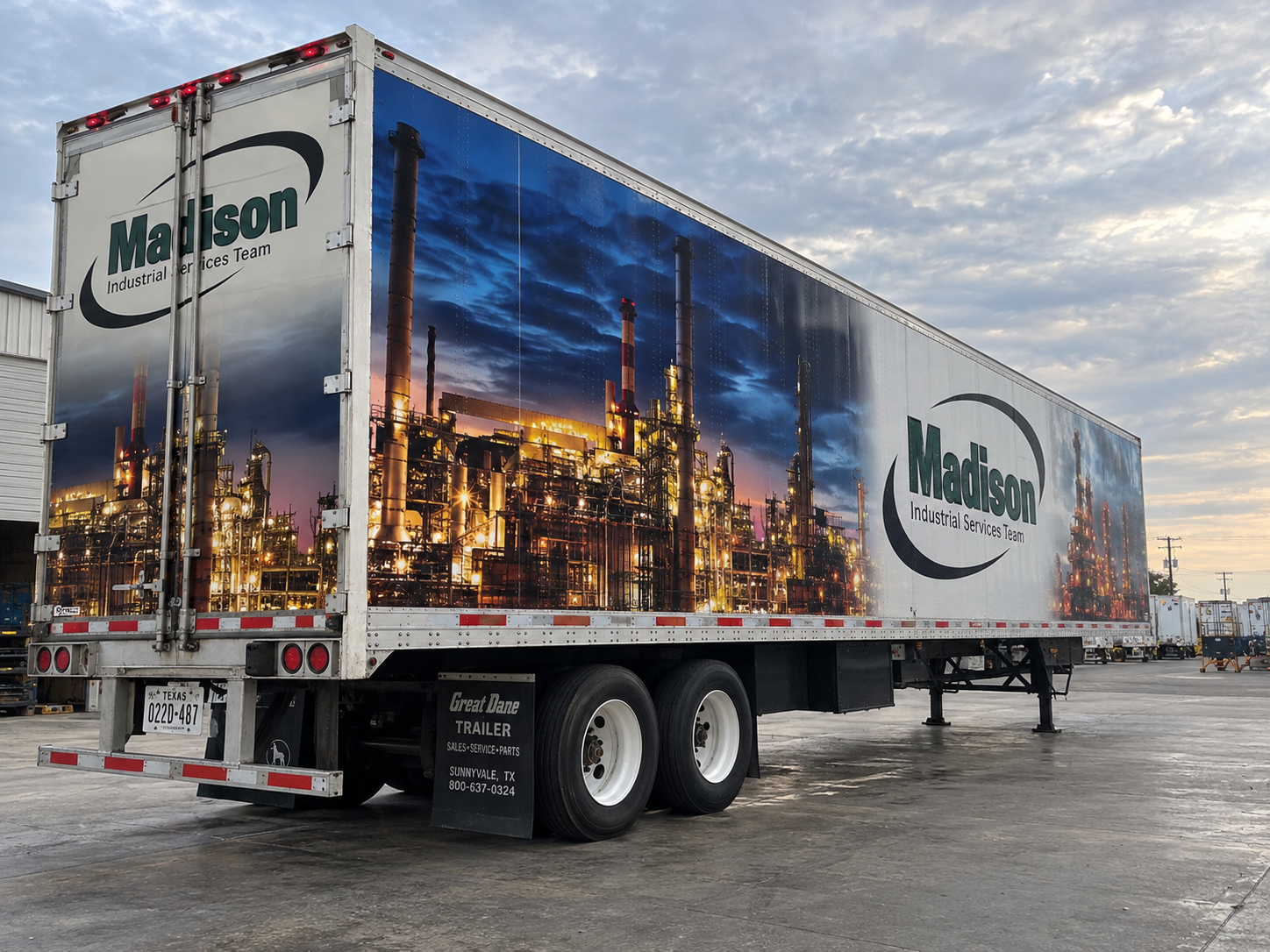
Measure the body, not the hitch
Record the length and height of the flat side wall between its outer edges. Measure both sides if the openings differ. List the tongue separately as trailer hardware. If the front is V-shaped, measure the face width of each angled panel along its surface and record the height. The distance from the point of the V to the hitch does not give the printable width.
Treat the rear as its own face
Measure the closed rear door or ramp across and top to bottom. Photograph hinges, handles, locks, reflective markings, trim and the gap between doors. For a box truck, say whether the rear is a roll-up door and whether a liftgate blocks it. For a trailer, say whether graphics are needed on the outside of the ramp only.
Separate box coverage from cab coverage
A cab requires its own photos and scope. List the hood, doors and any fairing separately. A quote for two box sides and the rear can leave the front wall and cab untouched. Write the requested faces in the email so everyone is pricing the same vehicle.
Use area as a cross-check
For two flat sides measuring 16 feet by 7.5 feet, the gross side area is 240 square feet. An 8-foot-wide rear at the same height adds 60, bringing those three faces to 300 square feet. This is a geometric check before openings, seams, production allowances or optional faces. Send measured photos for the final quote.